Source Vertical Air Supply Spiral Freezer for Seafood, Meat, Poultry
Explore 30 vertical air supply spiral freezer options for seafood, meat, and poultry processing. Compare models like SF-200 and HT-DSF500, featuring internal or external driving modes and customizable capacities to match your production needs; compare the available evidence and request quotations based on your requirements.
Key considerations
Products List


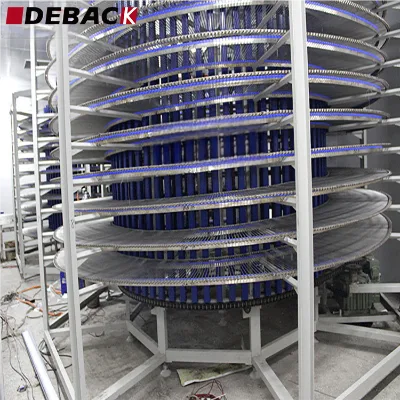


Square Factory Price High Capacity Enclosure Spiral Freezer Cooling Tower
$115000.00 - $600000.00
Moq: 1


Comprehensive Sourcing Guide
Vertical Air Supply Spiral Freezer Sourcing Guide
Procuring a vertical air supply spiral freezer requires careful evaluation of the specific airflow architecture, as this design dictates the uniformity of freezing for high-volume production lines. The observed market data confirms that vertical air supply is a distinct configuration often paired with internal driving modes to ensure consistent product movement through the freezing tunnel. Buyers must verify that the selected unit matches their specific throughput requirements, as the vertical orientation allows for a compact footprint while maintaining high production efficiency.
When evaluating listings, it is critical to distinguish between the vertical air supply models and other configurations like horizontal or plate-type freezers, which serve different product geometries. The available data indicates that these units are typically categorized as spiral type quick freezers with specific model numbers such as SF-200 or HT-DSF500. Sourcing teams should prioritize suppliers who explicitly list vertical air supply as a primary attribute to avoid mismatches in the freezing process that could compromise product quality or operational capacity.
Product Scope and Observed Listing Signals
The product scope for vertical air supply spiral freezers encompasses a range of industrial models designed for rapid freezing of diverse food categories including seafood, meat, pastry, and poultry. Listings frequently highlight the ability to handle customized capacities and temperatures, suggesting that these units are adaptable to specific production needs rather than being one-size-fits-all solutions. The observed price range of 299 to 2,000,000 USD reflects the significant variance in capacity, automation levels, and refrigerant systems available in the current market.
Buyers should scrutinize listing signals such as the specific driving mode, as some units are described with internal driving modes while others feature external driving modes, impacting maintenance and space requirements. The presence of export wooden crate packaging and seaworthy packing options indicates that these heavy industrial machines are built for long-distance shipping, often originating from regions like Guangdong or Tianjin in China. Understanding these listing signals helps procurement teams filter out incompatible units and focus on models that align with their logistical and operational constraints.
Technical Specifications to Verify
Technical verification must begin with the electrical and mechanical specifications, particularly the voltage requirements which are consistently listed as 380V for these industrial units. Buyers need to confirm whether the unit utilizes an internal or external driving mode, as this choice affects the structural integrity and maintenance accessibility of the spiral conveyor system. Additionally, the cooling mode is typically air cooling, and the refrigerant options may include R22, R404A, NH3, or R717, requiring a specific selection based on environmental regulations and facility capabilities.
Dimensional and structural specifications are equally critical, with observed standard sizes ranging from 400033002100mm to larger configurations like 700053502170mm. The model numbers, such as SR-VPF or VPF1500, often correlate with specific plate quantities or tunnel dimensions, which directly influence the freezing rate and throughput capacity. Procurement teams should request detailed engineering drawings to verify that the physical dimensions fit within the allocated factory floor space and that the single package size aligns with container loading plans, especially when shipping via 40HQ containers.
Compliance and Safety Documentation
Compliance documentation for vertical air supply spiral freezers must address both the electrical safety standards and the refrigerant handling regulations applicable to the destination market. While specific certification names are not universally listed in the provided data, buyers should demand proof of compliance with international electrical safety standards and verify that the refrigerant systems meet local environmental protocols. The automatic defrost feature and electronic controller systems should be accompanied by user manuals and safety data sheets that detail operational limits and emergency shutdown procedures.
Safety verification also extends to the mechanical design, ensuring that the spiral conveyor and driving mechanisms are enclosed or guarded to prevent operator injury during maintenance. The semi-automatic grade of these machines implies a need for clear safety interlocks and emergency stop protocols that are documented in the supplier's safety manual. Buyers should require a comprehensive safety dossier that includes risk assessments for the specific model, particularly regarding the high-speed moving parts and the potential hazards associated with the vertical air supply system.
Cost Drivers and Commercial Terms
The cost of a vertical air supply spiral freezer is driven primarily by the capacity, refrigerant type, and the level of automation, with observed minimum order quantities (MOQ) starting at just one unit. The wide price range suggests that costs are heavily influenced by the specific model configuration, such as the number of plates or the complexity of the electronic controller system. Buyers should expect that customized temperature and capacity options will incur additional costs, as these features require tailored engineering and manufacturing processes.
Commercial terms must clearly define the packaging and shipping responsibilities, as the observed data lists options ranging from export wooden crates to containerized shipping. The origin location, often China, impacts lead times and logistics costs, which should be negotiated explicitly in the purchase agreement. Procurement teams should clarify whether the quoted price includes installation support or if the unit is sold as a standalone item, as the complexity of the vertical air supply system often necessitates professional setup to ensure optimal performance.
Supplier Qualification and Quality Control
Supplier qualification should focus on verifying the manufacturer's experience with spiral freezer technology and their ability to deliver customized solutions for specific food applications. The presence of brand names like DEBACK and specific model numbers indicates established product lines, but buyers must confirm the supplier's track record in delivering units that meet the stated technical specifications. Quality control processes should include factory audits to ensure that the manufacturing of the aluminum alloy plates and the assembly of the driving modes adhere to strict quality standards.
Quality assurance protocols must also cover the testing of the electronic controller and the automatic defrost systems to ensure reliability in continuous operation. Buyers should request test reports or certification of the refrigerant system's integrity before finalizing the purchase. Given that the product origin is often in specific Chinese provinces, it is advisable to engage third-party inspection services to verify the build quality and packaging standards, ensuring that the unit arrives in the condition required for immediate installation and operation.
Long-Term Procurement Checks
Long-term procurement checks should prioritize the availability of spare parts and the supplier's commitment to after-sales support for the vertical air supply spiral freezer. Since these units are complex machines with specific components like the spiral conveyor and electronic controllers, buyers must ensure that replacement parts are readily available to minimize downtime. The supplier should provide a clear warranty policy and a maintenance schedule that covers the critical components identified in the technical specifications.
Buyers should also establish a protocol for periodic performance reviews to ensure the unit continues to meet the high production efficiency standards observed at the time of purchase. This includes monitoring the freezing performance, energy consumption, and the effectiveness of the air supply mode over time. Regular maintenance checks should be scheduled to address wear and tear on the semi-automatic components, ensuring the longevity of the investment and the consistent quality of the frozen products produced.
FAQs
What customization options are available for this freezer?
Customization is available for this vertical air supply spiral freezer to meet specific production needs. Buyers can request tailored specifications such as capacity, temperature settings, and dimensions. The product supports customized packaging and standard export wooden crate options. This flexibility ensures the equipment fits unique facility layouts and operational requirements effectively.
How is the voltage requirement defined for this unit?
The unit operates on a standard 380V voltage supply for reliable industrial performance. This electrical specification ensures compatibility with common factory power grids in many regions. The system utilizes an electric power source to drive the internal or external driving modes. Proper voltage connection is essential for maintaining the high production efficiency claimed for this spiral freezer type.
Which air supply mode does this spiral freezer utilize?
This model features a vertical air supply mode designed for efficient cooling distribution. The design supports the spiral type quick freezer configuration for optimal product freezing. Some variants may also offer horizontal air supply modes depending on the specific model number selected. This airflow strategy helps achieve uniform freezing results across various food products like seafood and meat.
Can the product be shipped in a container?
Yes, the product can be shipped in a container for secure international transport. Export wooden crate packaging is standard, but seaworthy packing and container options are also available. The specific packing method depends on the model size and standard dimensions like 4000*3300*2100mm. This ensures the equipment arrives safely regardless of the destination or shipping route chosen by the buyer.
What refrigerants are compatible with this quick freezer?
The system supports multiple refrigerant options including R22, R404A, NH3, and R717 for versatile cooling needs. These choices allow buyers to select based on local regulations and environmental requirements. The electronic controller manages temperature settings to ensure precise freezing for applications like pastry and ice cream. This flexibility makes the unit suitable for diverse industrial food processing environments globally.
What is the minimum order quantity for this equipment?
The minimum order quantity is one unit, allowing for flexible procurement strategies. This low MOQ enables buyers to test the equipment or start small without large capital commitment. The product is listed as a single item with customizable capacity and temperature settings. This approach reduces entry barriers for businesses seeking high production efficiency in quick freezing operations.
Where is the origin of this spiral freezer located?
The product originates from China, with specific manufacturing locations including Tianjin and Guangdong. These regions are known for producing industrial freezing equipment with competitive pricing and specifications. The origin ensures access to established supply chains for parts and maintenance support. Buyers can expect standard export packaging and compliance with international shipping requirements from these Chinese facilities.